

On 25 February 2026, Finance Minister Enoch Godongwana stood before the National Assembly and delivered the 2026 Budget Speech. South Africa’s solar industry listened closely. It had been hoping for new consumer incentives, extended tax rebates, or at least a clear signal that the government intended to support the rapid growth of rooftop solar.
It got none of that.
However, the disappointment lasted only as long as it took the industry to remember something important: the case for going solar in South Africa has never depended on government. It has never needed to. And in 2026, it is stronger than it has ever been.
This article explains why, and why the right time to go solar is now, budget speech or not.
What the 2026 Budget Speech Said About Solar
The Omission
The solar industry had hoped for something. Anything. An extension of the Section 12B business tax incentive. A reinstated consumer rebate. Perhaps a signal that the government would intervene in rising electricity tariffs.
None of it arrived. GoSolr CEO Andrew Middleton spoke for many in the industry when he said: “We are disappointed as we believe more could be done from the fiscus to encourage investments into renewable energy and linked industries.”

The South African Photovoltaic Industry Association (SAPVIA) was measured in its response. It welcomed the infrastructure focus but called on the government to expand targeted tax incentives for rooftop and embedded generation, noting that renewable energy is a growth-enhancing investment that pays dividends. It was polite, but the message was clear: more could have been done.
What The Budget Speech Actually Announced
To be fair, the budget was not entirely silent on energy. Several announcements will benefit the solar sector indirectly, even if they fall short of direct consumer incentives.
The biggest announcement was a commitment to invest more than R1 trillion in public-sector infrastructure over the medium term. A portion of that is directed at grid expansion and modernisation — a critical enabler for the SAWEM wholesale electricity market launching in April 2026. The government will also commence the first round of independent transmission projects this year, allowing private companies to invest directly in expanding the national grid.
Beyond the grid, a new Credit Guarantee Vehicle developed with the World Bank will help unlock large-scale private investment in transmission infrastructure. A R3.8 billion allocation targets electrification under the Integrated National Electrification Programme, alongside a R2 billion smart meter rollout.
The VAT registration threshold was raised from R1 million to R2.3 million. This reduces administrative burden on smaller solar installation businesses — which keeps more installers competitive and, over time, helps keep installation costs down for consumers.
The carbon tax also increased to R308 per tonne, making grid electricity from coal relatively more expensive compared to solar. That is a structural tailwind for the industry, even if it is not a direct incentive.
For a full breakdown of the budget, GroundUp and Green Building Africa have detailed analyses worth reading.
Why the Budget Speech Does Not Change Your Decision
South Africa Built Its Solar Industry Without Government
Here is the important context: South Africa’s rooftop solar boom happened largely without government support.
Over the past three years, South Africans installed more than 5,000 MW of rooftop solar — a citizen-driven build-out that significantly reduced demand on Eskom and helped end load shedding. This happened during a period when the only meaningful consumer incentive — a one-year solar panel tax rebate introduced in 2023 — was temporary, modest, and has since expired.
In other words, South Africans went solar because it made financial sense. Not because the government told them to.
Andrew Middleton’s fuller point is worth quoting directly. “We are, however, in a decentralised solar environment, where we can generate power without the need for the grid. Therefore, if Treasury can balance the incentives for mass grid investment versus supporting decentralised solar energy, that would reduce the investment risk.” Government support would help. However, the absence of it does not break the case.
Eskom Tariffs Do the Work Government Won’t
From 2007 to 2024, Eskom electricity tariffs increased by 937%, according to analysis by PowerOptimal. Inflation over the same period was 155%. In other words, electricity became six times more expensive in real terms in under two decades.
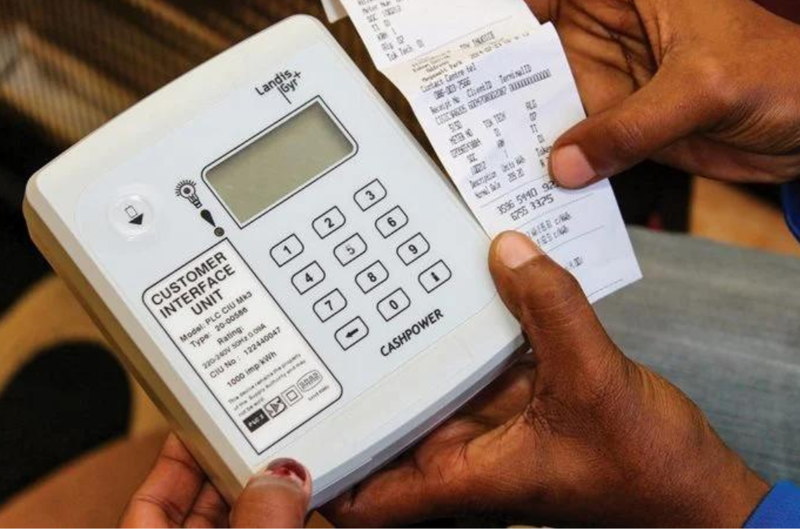
The trajectory has not changed. From April 2026, Eskom direct customers will face an 8.76% headline increase — but many smaller households will see fixed charges alone jump by around 28% due to Eskom’s retail tariff restructuring. Furthermore, hikes of 8.83% are already approved for 2027/28. As reported by BusinessTech, the national average electricity tariff has increased by around 10% per year from 2014 to 2025, compared to an average inflation rate of 5.2%.
Every year you delay going solar is another year of paying more — and locking yourself into a tariff trajectory that is not going to reverse.
Equipment Costs Have Fallen Sharply
While electricity prices went up, solar went in the opposite direction.
Over the past decade, the cost of a 22kW residential solar system has fallen by 63%. During the same period, grid electricity costs rose by 356%. Solar panels in South Africa now cost as little as R3.50 per watt. A commercial 50kW installation that cost over R1 million in 2020 now costs around R600,000. That shift has nothing to do with government policy.
In addition, battery storage costs have dropped significantly. As lithium iron phosphate (LiFePO4) technology has matured and global manufacturing capacity has expanded, the cost of adding battery backup to a solar system has become far more accessible than it was even three years ago.
Together, these two trends — rising tariffs and falling equipment costs — create a gap that widens every year you wait.
South Africa Has 2,500 Hours of Sunshine
The government also did not create South Africa’s solar resource, and it cannot take it away.
With more than 2,500 hours of sunshine per year, South Africa has one of the best solar resources on the planet. That is a structural advantage that makes solar viable here in ways it simply is not in large parts of Europe or the northern United States. No budget speech changes that fact.
What the Budget Got Right — For the Long Term
Grid Investment Is Good for Solar Owners
The R1 trillion infrastructure commitment and the independent transmission projects are genuinely positive for the solar sector — just not in the way a consumer rebate would be.
Better grid infrastructure means faster connection approvals, fewer bottlenecks for businesses selling excess power, and a stronger platform for the SAWEM wholesale electricity market to operate on when it launches in April 2026. If you are a business owner with a commercial solar installation, a more functional grid means more opportunities to monetise your excess generation. For more on what SAWEM means for solar owners, read our dedicated SAWEM article.
Rising Carbon Tax Adds Pressure on Coal
The carbon tax increase to R308 per tonne makes coal-generated electricity progressively less competitive. As a result, the economics of solar versus grid power shift further in solar’s favour over the medium term — even without direct consumer incentives.
VAT Relief Supports Your Installer
The raised VAT threshold from R1 million to R2.3 million directly benefits smaller solar installation businesses. Therefore, it helps keep the installation market competitive, which in turn helps consumers access better pricing and service.
The World Has Already Voted on South Africa’s Energy Future
Europe Is Sending Billions — And It Is Not Waiting for the Budget
While the 2026 Budget Speech was quiet on solar incentives, the international investment community has been anything but.
Since March 2025, the EU has committed an extraordinary amount of money to South Africa’s energy transition. A €4.7 billion package in March — with €4.4 billion directed at clean energy — was followed by a broader €11.5 billion pledge in October targeting grid upgrades, new generation capacity, and energy storage. By November 2025, a year-long campaign co-led by EU Commission President Ursula von der Leyen and President Ramaphosa had secured €15.5 billion in total renewable energy commitments for Africa, with Europe contributing more than €15.1 billion of that figure.
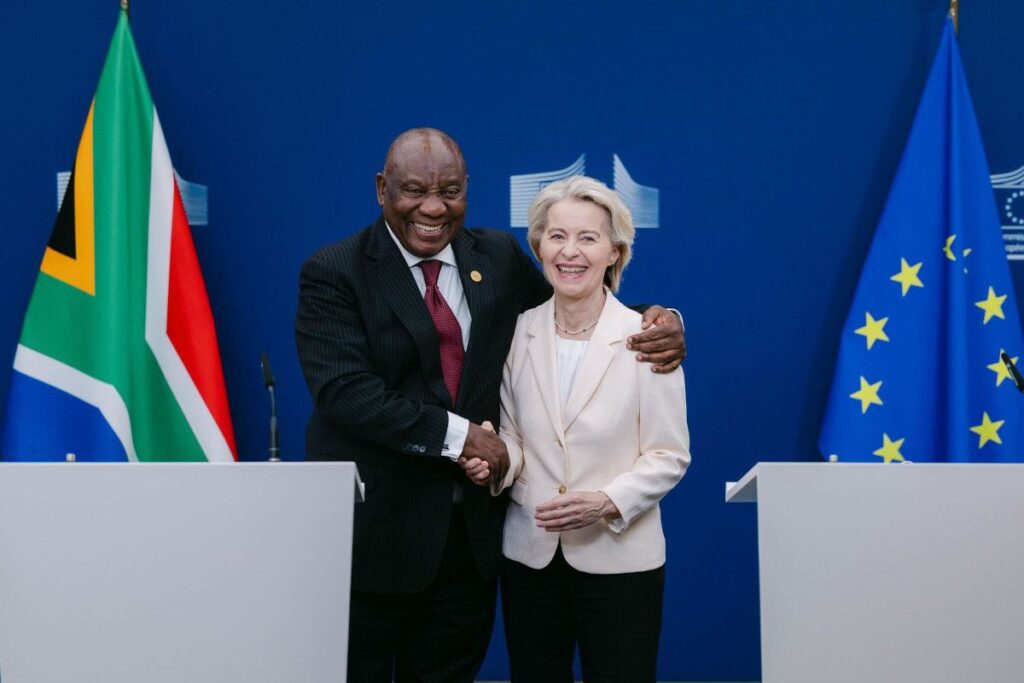
This is not a pledge that sits in a drawer. The Just Energy Transition Partnership — the formal framework through which much of this funding flows — counts the EU, Germany, France, the UK, Denmark, and the Netherlands as active partners, with total commitments now standing at over $12 billion directed specifically at South Africa’s energy transition. The US withdrew its contribution in February 2025, but the remaining partners publicly reaffirmed their commitment and have continued disbursing funds.
What This Actually Means for Solar Owners
The bulk of this international funding targets grid infrastructure, transmission upgrades, green hydrogen development, and the managed retirement of coal power stations. It is not a rooftop solar rebate programme, and it will not put money directly in your pocket next month.
However, the implications for solar owners are real and long-term. Every rand invested in grid modernisation makes it easier and faster to connect solar power systems, sell excess power to the grid, and participate in the SAWEM wholesale electricity market launching in April 2026. A stronger, more modern grid is the foundation that makes distributed solar more valuable — not less.
Furthermore, the scale of this international commitment sends an unambiguous signal about the direction of travel. Governments, development banks, and private investors from across Europe are committing hundreds of billions of rands to South Africa’s energy transition. They are not doing so because they expect the transition to stall. They are doing so because they expect it to accelerate.
The 2026 Budget did not fund your solar panels. However, Europe already has.
The Numbers That Actually Drive Your Decision
Incentives are helpful. However, the core financial case for solar in South Africa rests on three things that no budget speech can alter.
The Tariff Trajectory
Eskom tariffs have risen at roughly double the rate of inflation for more than a decade. They will continue to rise. The 2026 budget did nothing to slow that. If anything, with no consumer relief announced and fixed charges increasing significantly for many households from April, the pressure to find an alternative is greater now than it was a year ago.
The Cost of Equipment
Solar panels and batteries are cheaper than they have ever been. The gap between what it costs to go solar and what it costs to stay on the grid keeps widening. Waiting does not save money — it costs money.
The Payback Period
For a well-sized residential system, payback periods are typically in the five to seven-year range against a 25-year panel lifespan. For commercial and industrial installations with higher consumption, payback can be even faster. That equation improves every year as tariffs rise and equipment costs stabilise.
So, When Is the Right Time to Go Solar?
Before the next tariff increase, which takes effect in April 2026. Before the next budget, that might add to your costs elsewhere. Before SAWEM launches, the commercial electricity market shifts further in favour of distributed solar generation.
The direction of travel is clear. Eskom tariffs will keep rising. Equipment costs are at historic lows. South Africa’s grid is being opened to competition. And the government, whatever it did or did not say in February, has confirmed a 40% renewable energy target by 2030 as national policy.
The budget speech did not change a thing. The case for going solar was strong before 25 February 2026. It is equally strong after it.
Speak to Aspergo About Going Solar
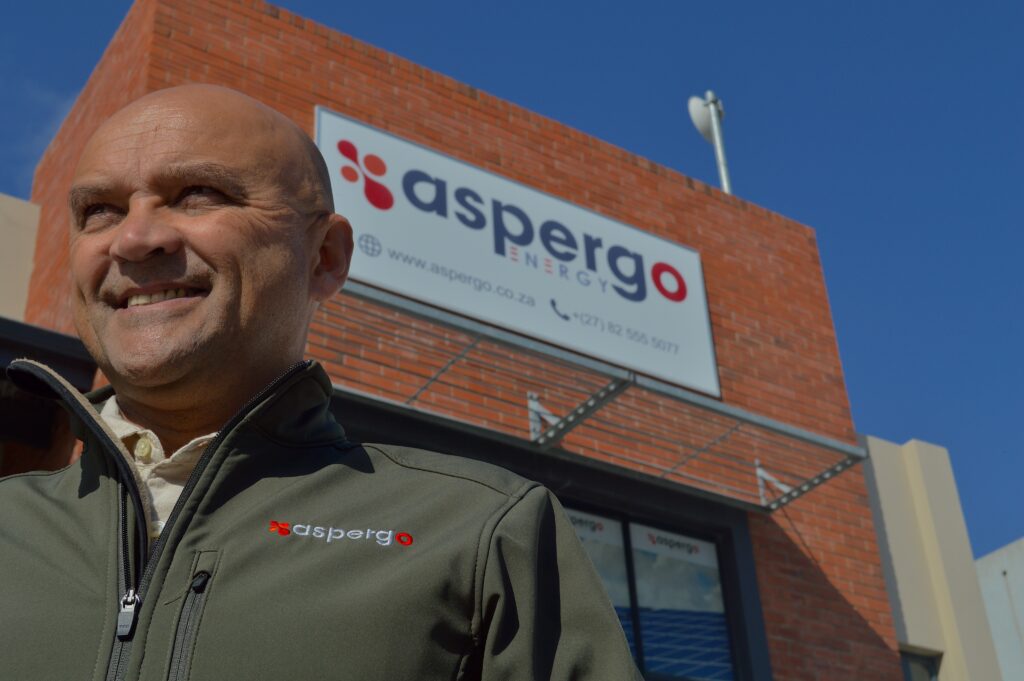
Aspergo has been supplying professional-grade solar equipment since 2008. Whether you are a homeowner looking for energy independence, a business ready to cut electricity costs, or a solar installer looking for reliable stock, our range of hybrid inverters, battery storage systems, and commercial solar solutions is built for South Africa’s conditions.
Browse our full product range or contact us to speak with a certified installer. The right time is now — and it always has been.
